Laboratory work №6
Hello, dear friend, you can consult us at any time if you have any questions, add WeChat: daixieit
Decision Making Lab6
Laboratory work №6
Topic: Study of decision-making criteria under conditions of complete uncertainty
Goal of the work:
- to study the conditions of application of decision-making criteria under conditions of complete uncertainty;
- to study the algorithms for using decision-making criteria under conditions of complete uncertainty;
- implement the use of criteria in the MS Excel environment.
The order of work
1. Study theoretical information about the essence of the problem of decision-making in conditions of complete uncertainty.
2. Study the peculiarities of decision-making criteria in conditions of complete uncertainty.
3. Choose the subject area of decision-making.
4. Perform verbal formulation of decision-making tasks in the chosen subject area, define target functions.
5. In the MS Excel environment, create a revenue matrix and a cost matrix with 5 alternatives, 5 states of the decision-making environment and the probabilities of these states.
6. Search for solutions using each criterion (from those proposed in the theoretical part of the instructions) to find solutions.
7. Compare the obtained solutions. Explain the results. Demonstrate the process of finding solutions to the teacher.
8. Make a report on laboratory work.
9. Defend laboratory work.
Content of the report
1. Topic of the work.
2. Goal of the work.
3. Individual task.
4. Description of the work execution.
5. Interpretation of the obtained results.
6. Conclusions.
Individual tasks
Research the use of all proposed criteria for solving problems in the selected subject, performing the necessary calculations in MS Excel.
BRIEF THEORETICAL INFORMATION
The connection of alternatives with results in conditions of complete uncertainty assumes that the arrows on the graph (Fig. 1) do not have weights, that is, there is no probabilistic information. In this case, the probability distribution densities are used.
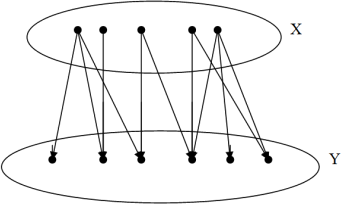
Figure 1 – Relationship of alternatives with results in conditions of complete uncertainty
Uncertainty in the selection and realization of links between alternatives and results can have a more complex nature.
Making decisions under conditions of complete uncertainty
The application of methods of the theory of probabilities in the case of a one-time implementation of the result of the adopted decision is illegal. A similar situation arises when the result is implemented multiple times, but under the assumption that either the probability distribution of the parameter z is unknown, or the uncertainty parameter z is not random, but changes in an unknown way (does not have the property of statistical stability). In these cases, information about the uncertainty factor has the form:
z є Z,
where Z – some set. Such information is not enough for an unambiguous solution to the problem J(x,z) → max of choosing an alternative х.
Let's define the vector x as a function of z:
x = x(z).
This formula allows you to display the set of uncertainties of natural factors Z на множину Gx X, which is called the decision uncertainty set х. Selecting a specific element from a set Gx can be based on the introduction of various hypotheses about the behavior of the environment.
To choose the best solutions under conditions of uncertainty, the following criteria are most often used: Wald, gambler, Savage, neutral pity criterion, Hurwitz, Hurwitz modified, product.
Let's consider the application of the specified methods on an example.
2025-06-23
Study of decision-making criteria under conditions of complete uncertainty